Telehealth for OCD and Anxiety: Is It as Effective as In-Person Care?

The rise of virtual care has transformed mental health support. For people living with OCD or anxiety, one common question comes up: Is online anxiety treatment as effective as seeing a therapist in person?

At AMA Behavioral Therapy, we’ve seen firsthand how telehealth services can expand access while maintaining the highest standards of evidence-based care.


The Rise of Online Anxiety Treatment

Online therapy isn’t a temporary fix it’s now a trusted, long-term option for many clients. Research shows that treatments like Cognitive Behavioral Therapy (CBT), Acceptance and Commitment Therapy (ACT), and Exposure and Response Prevention (ERP) can be delivered effectively through secure video sessions.

Clients receive structured, evidence-based support without losing the quality of care found in in-person sessions.

Learn more about our Telehealth Services and how we bring OCD and anxiety treatment directly to your home.


Benefits of Telehealth for OCD and Anxiety

Accessibility – Whether you live in a major city or a rural Texas community, you can connect with an OCD therapist near you without long commutes.

Consistency – Telehealth reduces missed appointments, making it easier to stick to a treatment plan.

Comfort – Many clients feel more at ease starting therapy from home, especially when addressing sensitive topics like intrusive thoughts or compulsions. Since most compulsions occur at home, telehealth allows ERP exercises to take place in the actual environment where symptoms happen.

Evidence-Based Results – Studies confirm that online anxiety treatment is comparable in effectiveness to in-person care when delivered by trained specialists. Read more about these methods in our Counseling for Anxiety section.


When Telehealth Works Best

Telehealth is especially effective for:

  • Adults and teens with OCD or anxiety who want flexible scheduling
  • Parents seeking ongoing therapy support for their child
  • Clients who may feel anxious about leaving home or starting care in a clinic setting

Explore our Cognitive Behavioral Therapy (CBT) approach for online and in-office care.


When In-Person Care May Be Preferable

In some cases, in-person treatment is recommended especially for higher levels of intensity such as our Intensive Outpatient Program (IOP).

At AMA, we offer both telehealth and in-person options, so you don’t have to choose between quality and convenience.


Online anxiety treatment isn’t a compromise it’s a proven, evidence-based way to access specialized care.

With certified OCD and anxiety specialists, AMA Behavioral Therapy ensures that whether you’re at home or in our office, you’ll receive structured, ethical, and compassionate support every step of the way.


Ready to explore whether telehealth is right for you?
Contact AMA Behavioral Therapy today to schedule a consultation with an OCD therapist.

Why Texas Needs More OCD Specialists (and How AMA Helps Fill the Gap)

Finding effective OCD treatment can feel overwhelming. Many people start by searching ocd therapy near me or asking for referrals, only to discover that truly specialized care is hard to find. In Texas, the need for OCD therapy is greater than ever and AMA Behavioral Therapy is working to close that gap.


The Shortage of OCD Specialists in Texas

While anxiety disorders are among the most common mental health conditions, OCD often goes misdiagnosed or untreated. Many general therapists aren’t trained in evidence-based approaches like ERP, CBT, or ACT. This leaves individuals searching for an OCD therapist near me with limited, and sometimes ineffective, options.


Why Specialized Training Matters

OCD is not “just anxiety.” It requires targeted methods that have been clinically proven to reduce symptoms and improve quality of life. Without specialized training, therapy can be frustrating or even counterproductive.

At AMA, every clinician is certified in ERP, CBT, and ACT, ensuring that clients receive the right treatment from the start.


How AMA Behavioral Therapy Is Filling the Gap

  1. Led by an Expert – Andrea M Alvarez is a nationally recognized leader in OCD treatment and a board member of the Texas OCD Foundation.
  2. Evidence-Based Care – AMA uses structured, research-backed therapies, not general talk therapy.
  3. Intensive Options – For those who need more than weekly sessions, our Intensive Outpatient Program provides deeper, focused support.
  4. Accessible Care – With both in-person and telehealth services, you don’t have to settle for “good enough” when you need OCD therapy near me.

Why This Matters for Texas Families

When people can’t find the right care, progress becomes harder to reach. AMA Behavioral Therapy provides specialized programs that give individuals and families across Texas access to ethical, effective treatment led by experts.


San Antonio, needs more OCD specialists but you don’t have to wait to find the care you deserve. AMA Behavioral Therapy is here to provide expert, evidence-based treatment for OCD and anxiety, delivered with compassion and integrity.

Call to Action: If you’ve been searching for an OCD therapist near me, schedule a consultation today. Real relief starts with specialized care.

Beyond Talk Therapy: What to Do When You Need More Support

Talk therapy is one of the most common and effective ways people begin their mental health journey. It provides a safe, structured space to share experiences, process emotions, and gain new perspectives on life’s challenges. For many, talk therapy alone can bring relief and lasting change.

But sometimes, talking is only part of the solution. Some conditions require more than insight and conversation to achieve meaningful progress.


When Talk Therapy May Not Be Enough

While talk therapy builds awareness and emotional connection, it may not always give people the tools they need to manage severe or persistent symptoms. Examples include:

OCD and Anxiety Disorders – Talking about fears may not reduce them and may even reinforce OCD symptoms. Structured therapies like Exposure and Response Prevention (ERP) are often more effective.

Trauma and PTSD – These experiences may need targeted methods such as trauma-focused Cognitive Behavioral Therapy (CBT) or Cognitive Processing Therapy (CPT), or methods like Eye Movement Desensitization and Reprocessing (EMDR) to help the brain process safely.

Severe or Chronic Symptoms – Weekly talk therapy may not provide enough intensity when symptoms are significantly impacting daily life.

In these cases, combining or moving beyond talk therapy may be the next step.


Options Beyond Talk Therapy

If progress feels limited, there are many evidence-based treatment options that complement or extend talk therapy:


Signs You May Need More Than Talk Therapy

You may benefit from exploring additional support if:

  • Weekly talk therapy hasn’t reduced symptoms after consistent effort.
  • Mental health struggles continue to disrupt work, school, or relationships.
  • Anxiety, compulsions, or trauma responses remain strong despite talking about them.
  • You feel “stuck” and want more practical strategies to create change.

Expanding the Path to Healing

Talk therapy is a powerful starting point, but it’s not always the full solution. Expanding care to include skills-based therapies, group support, or intensive programs can provide the tools needed to make real progress.


Support at AMA Behavioral Therapy

At AMA Behavioral Therapy, we provide treatments that go beyond talk therapy, including CBT, ERP, group sessions, and Intensive Outpatient Programs (IOPs).

Our clinicians tailor care to your needs, helping you move forward with confidence.

If you’re ready to explore therapy options beyond talk therapy, contact AMA Behavioral Therapy today to take your next step toward healing.

OCD Treatment Options: Inside an Intensive Outpatient Program (IOP)

Understanding OCD and Its Challenges

Obsessive-Compulsive Disorder (OCD) is more than habits or quirks. It involves persistent intrusive thoughts (obsessions) and repetitive behaviors (compulsions) that can take over daily life. For some, weekly therapy offers relief. But when symptoms become too disruptive, a higher level of care may be needed.

That’s where an Intensive Outpatient Program (IOP) can help.

What Is an Intensive Outpatient Program (IOP)?

An IOP provides a middle ground between weekly therapy and inpatient treatment. Clients attend therapy multiple times a week, often in extended sessions, while still living at home and managing school, work, or family responsibilities.

This structure creates space for more focused care without the need for hospitalization.

How OCD IOP Therapy Works

OCD IOPs are built around evidence-based approaches like Cognitive Behavioral Therapy (CBT), Acceptance Commitment Therapy (ACT)  and Exposure and Response Prevention (ERP). These methods help clients:

  • Identify and challenge unhelpful thoughts
  • Face fears gradually in safe, supportive settings
  • Resist compulsions and learn healthier coping strategies
  • Gain confidence in managing real-life challenges

Because therapy happens more frequently, clients often see progress faster than with once-a-week sessions.

What to Expect in an OCD IOP

A typical program may include:

  • Individual therapy tailored to specific triggers and goals
  • Group therapy for shared learning and peer support
  • Family education to strengthen understanding at home
  • Homework and practice to reinforce strategies between sessions
  • One on One therapist and client ERP work in session

This combination of approaches makes IOPs both structured and adaptable to each person’s needs.

Who Benefits from OCD IOP Therapy?

OCD IOP therapy may be recommended for those who:

  • Experience severe symptoms that interfere with daily life
  • Haven’t seen enough progress from weekly therapy alone
  • Need intensive treatment but not inpatient hospitalization
  • Want consistent, structured care while staying connected to everyday routines

Why an IOP Can Make a Difference

The intensity and frequency of sessions give IOPs a unique advantage. They allow clients to break free from the cycle of obsessions and compulsions more actively, while still practicing new skills in their daily environments.

OCD is highly treatable, and an IOP provides an important bridge for those needing more than standard therapy.

Next Steps with AMA Behavioral Therapy

At AMA Behavioral Therapy, we understand how overwhelming OCD can feel. Our team is trained in ERP, ACT and CBT and offers personalized, evidence-based support designed to help clients move forward.

If you or a loved one is struggling with OCD and want to explore whether IOP therapy is the right fit, contact AMA Behavioral Therapy today.

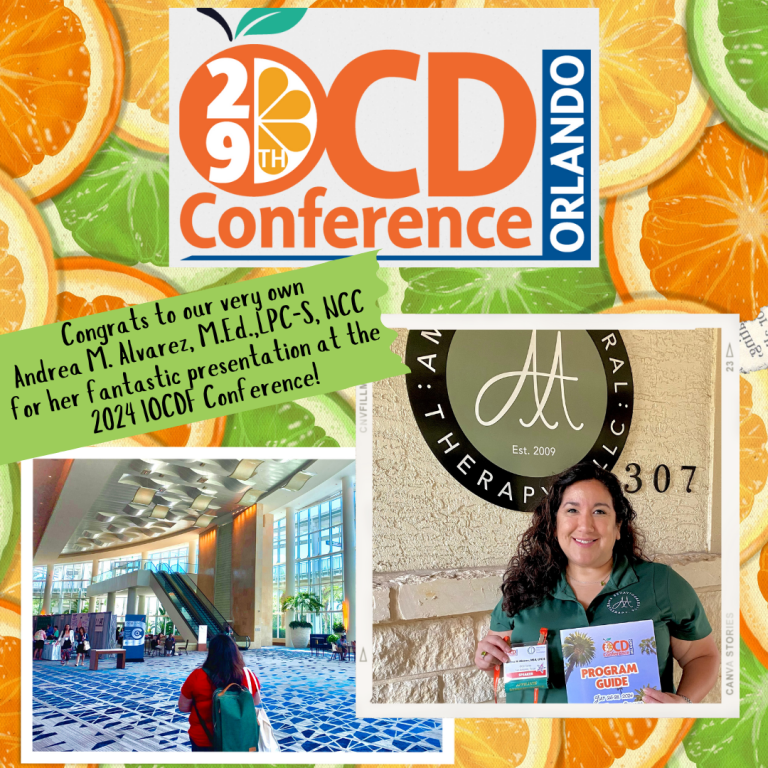
IOCDF Conference Presentation: OCD & Big (Rage) Feelings

The most recent presentation shed light on the often-overlooked emotional challenges faced by those with OCD. She explored the stages of anger, shame, and guilt experienced by sufferers. Andrea provided valuable insights and emotional regulation skills to help individuals break free from the cycle of negative emotions.

Exposure and Response Prevention Therapy

Exposure and response prevention (ERP) is a form of cognitive behavioral therapy (CBT) that is widely used in the treatment of OCD. It isconsidered the first-line psychological treatment due to its very strong evidence base and effectiveness in reducing symptoms andimproving functioning in people with OCD.

ERP is a first-line treatment and is therefore recommended for most people with OCD. If you have tried other treatments for OCD thathave not worked, it is worth considering ERP. You can do ERP while taking medication or while doing most other types of therapy aslong as your ERP therapist is aware of these other treatments. 

ERP typically begins with 2–3 sessions of education about OCD and a detailed assessment of your obsessions, compulsions, andavoidance patterns. Next, you and your therapist work together to develop an exposure list or “hierarchy” of selected situations,thoughts, and other stimuli that provoke obsessional fear. 

Following these treatment planning sessions, the therapist coaches you through the process of gradually confronting the fearedsituations, objects or thoughts on the hierarchy (exposure therapy), without engaging in any compulsions or avoidance (responseprevention). Exposure practices are planned ahead of time, and might involve directly confronting an actual situation or stimulus(situational exposure) or confronting thoughts and images (imaginal exposure). You are never forced or deceived into exposure —rather, therapists coach and encourage patients to gradually take more and more challenging steps. Response prevention entailshelping you resist the urge to engage in compulsive behaviors during and after exposure. You would also be asked to completeadditional ERP practice between sessions.

During ERP, your level of anxiety is expected to increase. This is an important part of therapy because it helps you learn that (a) anxiety,unwanted thoughts, and feelings of doubt and uncertainty are not dangerous and you can manage them better than you thought, (b)this increase in distress is only temporary, and (c) the negative consequences you’re afraid of are unlikely to happen. With consistentpractice, ERP reduces the anxiety and avoidance associated with obsessions and compulsions and increases your ability to function inyour various roles. Over time, these exercises often get easier.

A typical course of ERP therapy spans anywhere from 12 to 20 sessions but can be adjusted based on individual needs. Sessionstypically last about one hour each. The format of ERP can vary, including individual therapy sessions (once per week or more), groupsessions, intensive outpatient programs, or teletherapy options. Self-help resources can also complement the therapy.

ERP is typically administered by licensed mental health professionals, such as psychologists, psychiatrists, social workers, and counselors, who have specific training and expertise in ERP. To find a qualified provider, it is best to consult professional organizations specializing in OCD (like IOCDF) or seek referrals from other professionals. It’s also important to verify the provider’s credentials and experience with ERP. 

WHY/HOW IT WORKS:

ERP works by allowing you to confront and habituate to your fears in a controlled environment, facilitated by a therapist. Habituationmeans staying in the situation long enough to see that anxiety naturally subsides even if you don’t perform rituals or fight the anxietyitself. Through repeated ERP, you also learn that your obsessions and anxiety are “false alarms,” and that your feared outcomes areunlikely and do not require compulsive rituals. Research shows that this leads to a rewiring of neural pathways in the brain. ERP alsobuilds confidence and empowerment, enabling you to learn that you can effectively manage obsessional thoughts and anxietywithout getting stuck.

SUMMARY OF THE RESEARCH SUPPORT:

Since the 1960s, hundreds of clinical trials have been conducted on the effects of ERP with thousands of adult, adolescent, andpediatric patients in countries around the world. This vast body of literature has consistently demonstrated that ERP can produce largeOCD symptom reductions, which are often maintained in the long-term. On average, patients achieve a reduction of 60% of OCDsymptoms, along with reductions in general anxiety, depression, interpersonal stress, and functional interference. Accordingly, ERP isrecognized as a first-line, evidence-based treatment for OCD . 

AGE CONSIDERATIONS

ERP has been shown to be effective in children as young as six years old, all the way through older adulthood. 

OTHER IMPORTANT CONSIDERATIONS:

Importantly, ERP is not effective for everyone. We know that several factors can impact how well people respond. The most importantfactor is putting in the hard work — you get out of ERP what you put into it. Although it can be challenging to face your fears andresist rituals, with practice, you find that doing so is very much worth the effort and the temporary discomfort. Other factors that caninterfere with treatment include severe depression, very poor insight into the senselessness of OCD symptoms, active bipolar disorderor psychosis, substance abuse, and extreme family or partner conflict or accommodation of OCD symptoms. 

WHEN TO TRY THIS TREATMENT:

ERP is a first-line treatment and is therefore recommended for most people with OCD. If you have tried other treatments for OCD thathave not worked, it is worth considering ERP. You can do ERP while taking medication or while doing most other types of therapy aslong as your ERP therapist is aware of these other treatments. 

An initial course of outpatient ERP is usually recommended first, but if that is not helpful, moving to a more intensive version, such asintensive outpatient or residential, can often be effective. 

Importantly, ERP is not for everyone. It only works if you are on board and willing to give it a try. That doesn’t mean you have to beenthusiastic about facing your fears (very few people are!), but that you’re at least open to putting in an effort. If someone else istrying to coerce or force you to do ERP against your will, you are unlikely to see positive results. That is because this treatment requireshard work and lots of consistent practice. If you have to be “forced” into treatment, it probably means that you are not at a pointwhere you’re ready to take these steps. In this case, it might help to work with a therapist to explore the pros and cons of ERP beforeyou do it. There are alternatives to ERP, as you can read about on this website.
25 Tips for Succeeding in Your OCD Treatment

1. Always expect the unexpected.

You can have an obsessive thought at any time or any place. Don’t be surprised when old or even new ones occur. Don‘t let it throw you. Be prepared to use your therapy tools at any time and in any place. Also, if new thoughts appear, be sure to tell your therapist so you can keep them informed.

2. Be willing to accept risk.

Risk is an integral part of life, and as such it cannot be completely gotten rid of. Remember that not recovering is the biggest risk of all.Dr. Fred Penzel’s 25 Tips for SucceedinDr. Succeedin……

8/5/25, 11:16 AM 25 Tips for Succeeding in Your OCD Treatment | IOCDF https://iocdf.org/expert-opinions/25-tips-for-ocd-treatment/ 1/7 

3. Never seek reassurance from yourself or others. 

Instead, tell yourself the worst will happen, is happening, or has already happened. Reassurance will cancel out the effects of anytherapy homework you use it on and prevent you from improving. Reassurance-seeking is a compulsion, no matter how you may tryto justify it.

4. Always try hard to agree with all obsessive thoughts

Never analyze, question, or argue with them. The questions they raise are not real questions, and there are no real answers to them.Try not to get too detailed when agreeing — simply say the thoughts are true and real.

5. Don’t waste time trying to prevent or not think your thoughts. 

This will only have the opposite effect and lead to thinking more thoughts. Studies have shown that you cannot effectively stop orpush down particular thoughts. Your motto should be, “If you want to think about them less, think about them more.”

6. Try to not be a black-and-white, all-or-nothing thinker

Don’t tell yourself that one slip up means you are now a total failure. If you slip and do a compulsion, you can always turn it aroundand do something to cancel it. The good news is that you are in this for the long haul, and you always get another chance. It is normalto make mistakes when learning new skills, especially in therapy. It happens to everyone now and then. Accept it. Even if you have abig setback, don’t let it throw you.

Remember the saying, “A lapse is not a relapse.” This means that you never really go back to square one. To do that, you would haveto forget everything you have learned up to that point, and that really isn’t possible. Also remember the sayings, “Never confuse asingle defeat with a final defeat,” (F. Scott Fitzgerald) and, as they say in AA, “You can always start your day over.” 

OCD Texas Symposium Keynote Speaker

  • Keynote Speaker: Once again, Andrea was honored as a keynote speaker, where she shared groundbreaking insights and advancements in the field of OCD.
  • Differentiation Between Anxiety and OCD: In this compelling presentation, she distinguished between anxiety disorders and OCD, clarifying diagnostic criteria and treatment implications.

OCD Symposium Key Note Speaker

  • Keynote Speaker: Andrea’s keynote address captivated the audience with her profound understanding of OCD and innovative treatment approaches.
  • Family Acc in OCD: She focused on the role of family accommodation in OCD, offering strategies to manage and reduce family involvement in compulsions.

FEATURED DOWNLOADABLE:

The OCD & Anxiety Guide

Download the simple guide from AMA Behavioral Therapy. Fill in the information below to download: