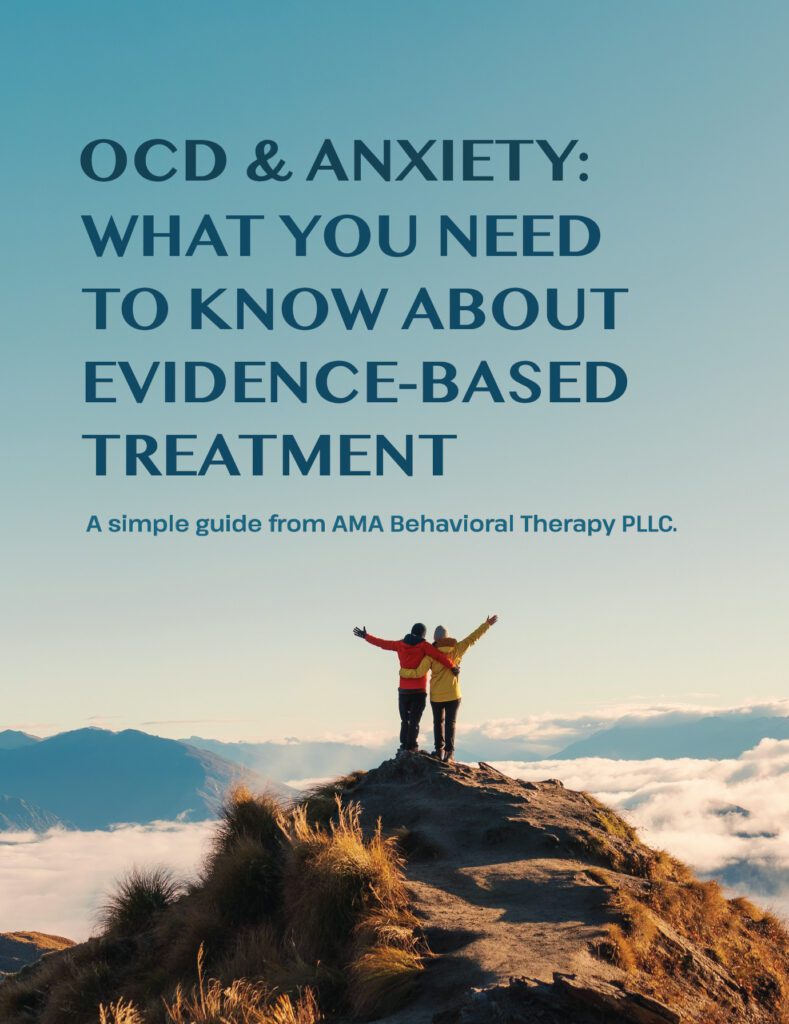
Watching someone you care about struggle with OCD can be heartbreaking. You might want to help but you’re not sure how. The truth is, supporting someone with OCD means balancing compassion with understanding, and learning what truly helps versus what unintentionally makes things harder.
Here are six meaningful ways to support a loved one living with OCD, based on the approaches we use at AMA Behavioral Therapy.
1. Learn What OCD Really Is
OCD isn’t about being “neat” or “organized.” It’s a mental health condition characterized by obsessions (intrusive thoughts) and compulsions (rituals meant to relieve anxiety).
You can learn more from the International OCD Foundation (IOCDF) a trusted resource for education and advocacy.
When you understand the condition, you can respond with empathy rather than frustration.
2. Avoid Reassuring or Participating in Compulsions
It’s natural to want to ease your loved one’s distress by giving reassurance (“It’s fine, you already checked the door”). But reassurance can unintentionally reinforce the OCD cycle.
Instead, gently remind them of what they’ve learned in therapy that anxiety will fade naturally without repeating rituals.
3. Encourage Professional Treatment
Encourage them to seek help from a qualified therapist trained in Exposure and Response Prevention (ERP) the most effective treatment for OCD.
If they’ve already started therapy, offer support by helping with scheduling, reminders, or simply listening after sessions.
4. Respect Their Boundaries
Recovery from OCD involves discomfort, and pushing too hard can backfire. Respect their pace and encourage progress without pressure.
5. Celebrate Progress, Not Perfection
OCD recovery isn’t linear. Celebrate small victories skipping a ritual, facing a fear, or completing an exposure.
At AMA, we remind clients that progress is measured by courage, not by symptom absence.
6. Take Care of Yourself Too
Supporting someone with OCD can be emotionally demanding. Set boundaries, seek support groups, or consult with a therapist yourself.
The National Alliance on Mental Illness (NAMI) offers free family resources and education programs nationwide.
Final Thoughts
Helping someone with OCD means walking beside them not leading, not pulling back, but supporting with patience, compassion, and hope.
If your loved one is ready to take the next step, reach out to AMA Behavioral Therapy to learn how specialized, evidence-based treatment can help them find lasting relief.